VOCEVA.AI)))
Your Property Listing Is Getting Viewed at 11pm. Nobody Is There to Sell It.
4 minute read, 3 if you're quick
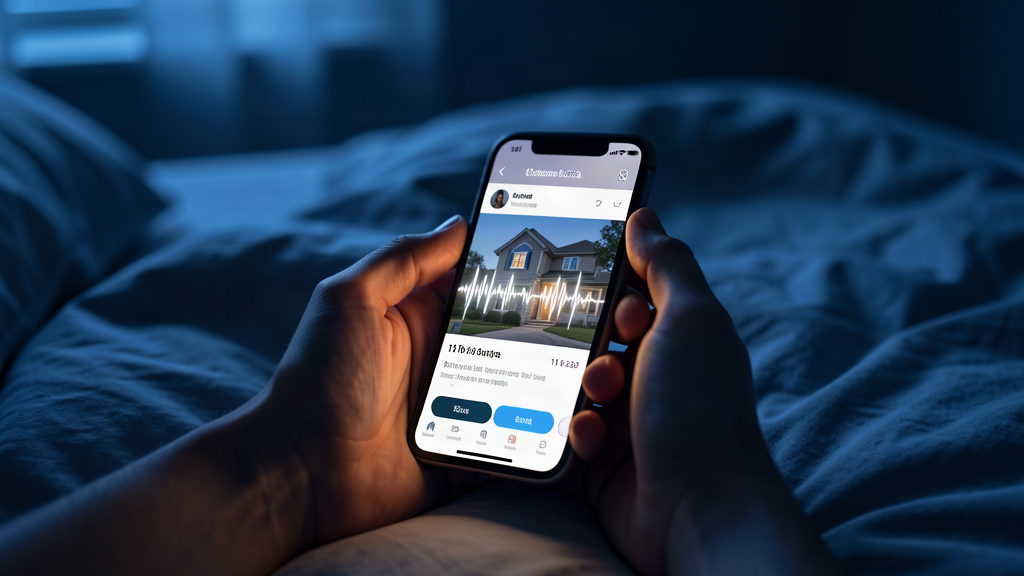
Here is a scenario that plays out every night in property. Someone is lying in bed at half eleven, phone in hand, having a look at what is on the market. They are not in buying mode in any formal sense — no appointment booked, no mortgage offer in hand — but they are browsing, and they are forming opinions. They visit maybe twelve listings in half an hour. They look at the photos, glance at the price, skim the description. By the time they put the phone down, three of those listings are in their head. The other nine are gone.
The question worth asking is: what made the three stick?
It was not the floor plan. It was not the energy rating. It was something about those listings that made them feel like more than a data dump — something that gave the property a character, a presence. The listings they forgot felt interchangeable. The ones they remembered felt like places.
Rightmove have published data showing more than 40% of portal traffic comes after 6pm. The estate agency offices are shut. There is nobody to answer the phone, nobody to chat to via live chat, nobody to add any colour to what the buyer is looking at. The listing is on its own. And if the listing is just photographs, a bullet-point description, and a floor plan — it is doing about as much work as a CV with no cover letter. Technically complete. Entirely forgettable.
This is a conversion problem that the industry has largely not addressed. Agents have put significant effort into portal presence — which makes sense, because that is where the traffic is — but the website listing, which is the one asset you own and control, often gets very little thought. The assumption is that buyers come from the portals, see the photos, and either call or they do not. But there is a meaningful middle ground: buyers who are interested enough to look but not yet interested enough to commit. That is the group you want to reach. And reaching them, at 11pm, when nobody is there, is a question of what your listing does when you are not watching it.
A voice bite addresses this directly. It plays on demand. It does not require the buyer to do anything except listen while they are already looking at the photos. In 30 to 45 seconds, it can tell a buyer something real about the property — the light, the road, the neighbourhood feel, the specific thing about this house that photographs do not convey — and it can do it in a way that text simply cannot match, because listening is a different cognitive experience from reading.
Think about why property television still draws audiences. Nobody watches Location, Location, Location to learn about stamp duty. They watch because property is inherently emotional and storytelling is how you access that emotion. Voice is the minimal-viable version of that. No camera crew, no presenter, no two-day shoot. Just the story, told properly, available whenever someone is looking.
The other thing worth saying: the agents who understand this tend to be the ones who think about their website as a product rather than a leaflet. There is a measurable difference between a listing page that a buyer spends 90 seconds on versus one they spend three and a half minutes on. Time on page is not a vanity metric — it correlates with enquiry rate. If a buyer is engaged enough to listen to a voice description, they are engaged enough to consider booking a viewing. That is the conversion path, and anything that extends engagement at the top of that path is working for you.
Voceva generates the audio from your existing listing data. There is no recording involved, no script to write, no separate process to manage. The voice bite appears on your listing page and plays on demand. It takes a few minutes to set up and then it just runs — at 11pm, on Sunday mornings, at any hour when someone happens to be looking and you are not there to help them along.
If you are thinking about what your website listings should actually do for buyers outside office hours, voceva.ai is the place to start.