VOCEVA.AI)))
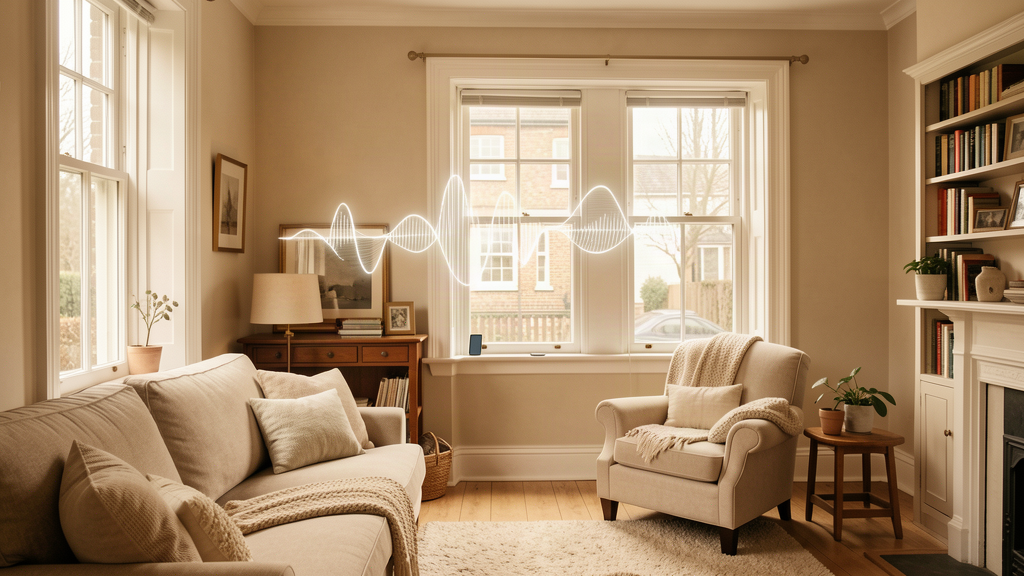
The Difference a Voice Bite Makes: A Cheltenham Listing, Before and After
4 minute read, 3 if you're quick
Take a two-bedroom Victorian terrace on Tivoli Road, Cheltenham. Asking price £295,000. The listing goes live on a Tuesday morning with seven photos, a floorplan, and the usual written description: bay-fronted reception room, cast-iron fireplace, kitchen-diner to the rear, south-facing garden, permit parking.
It is a decent listing. The photos are good. The description is accurate. And within 48 hours it has had 340 views on Rightmove and four saved searches — but only two enquiries.
Here is the problem. Nothing in that listing explains why this particular house, on this particular street, in this particular part of Cheltenham, is worth getting up early on a Saturday morning to view.
What the standard listing does not say
The photos show a bay window. They do not tell you that between 8am and noon, that front room is flooded with morning light in a way that makes the whole ground floor feel much bigger than the 68 square metres on the floorplan.
The description mentions “convenient for local amenities.” It does not say that Montpellier Gardens is a seven-minute walk, that there is a good independent café on the corner that has been there twenty years, or that the street itself is quiet enough that families leave bikes in the front garden unlocked.
It says “transport links.” It does not say Cheltenham Spa station is nine minutes on foot, which means a buyer commuting to London Paddington can be at their desk by 8:30am on a GWR fast service.
That is not the agent’s fault. Written descriptions have word limits. Buyers skim them anyway. And there is only so much a photograph can show about a street, a commute, or the quality of light at 9 o’clock on a winter morning.
The same listing with a voice bite
When a Voceva voice bite is added, the listing page gets a simple audio player — typically sitting just above or below the first photo carousel. The buyer presses play while they scroll.
For this Tivoli Road property, the voice bite runs to about 45 seconds. It picks up on the key facts the agent has already entered — property type, bedrooms, price, location — and wraps them in the kind of context that the written description cannot easily hold:
“A two-bedroom Victorian terrace in one of Cheltenham’s most walkable neighbourhoods. The bay-fronted sitting room faces south-east, which makes it a genuinely bright house through the morning. Montpellier Gardens is a short walk. Cheltenham Spa station is under ten minutes on foot, giving you direct services to Bristol and London. The garden runs to the south, which means outdoor evenings in the warmer months rather than afternoons. Guide price £295,000.”
Nothing in that script is invented. It is all drawn from what the agent already knows and has entered into their system. But the effect on the person listening is different to reading the same facts in a bullet list.
The difference in practice
Voice gives a listing sequence. When someone reads a property description, they absorb the facts in whatever order their eye lands. When they listen, the agent — or in this case, the agent’s AI-generated voice — gets to control the order. You lead with what matters most. You hold the commute point until after you have established the feel of the house and the street.
That sequencing is how a good negotiator talks about a property in a viewing. The voice bite brings that skill to the online listing, at the point where most buyers are deciding whether to request one at all.
For the Tivoli Road listing, the voice bite also does something the written description cannot: it tells the buyer what kind of life this house makes possible, not just what it contains. That is the detail that converts a saved search into a viewing request.
What agents notice first
When agents first hear a Voceva voice bite for one of their properties, the most common reaction is: “That’s what I’d actually say to someone.” Not what you’d type into a listing portal description box. What you would say, face to face, to someone asking whether a property is worth a look.
That is the gap the voice bite closes. Not between having audio and not having audio. Between the listing that explains and the listing that just lists.
The Voceva widget drops into your existing WordPress property pages. No new site, no new process. The listing is what it already is — the voice bite is what it could be.